
This article first appeared in Print in the Channel magazine issue #37.
Xerox recently held its Western Europe Channel Forum in Germany to bring together Xerox and Lexmark channel partners and leaders to outline their ambitious strategy to accelerate print sales across Europe.
It has been a busy time for Xerox in recent months, as the integration of the Lexmark business has gathered pace and the company has unveiled its revised management structure and renewed go to market strategy in EMEA.
But now the changes have been made, it is important to communicate them to its network of partners, and to this end, partners from across Europe came together on May 11-12 in Frankfurt in Germany, for Xerox’s Western Europe Channel Forum.
“It’s always a highlight to see our partners at any event, but this one was different, because we brought together what was traditionally Xerox partners with Lexmark partners for one of the first times in the same forum,” says Matt Raab, director of global portfolio marketing at Xerox. “It was good to see the interactions and the strong engagement between everyone.”
Also at the event, Xerox lifted the covers on some of its new A3 and A4 devices that will be launched later this year, along with the services that will go with them. “You felt the momentum there,” he adds. “The company is headed in the right direction, especially as we unveiled this new kind of go-to-market for Western Europe.”
One of the themes of the Forum was Accelerating the Pace. “For us, that’s shifting from integrated planning into execution mode,” explains Matt. “Now that we’ve got the alignment that we were looking for in Western Europe, it becomes about how we simplify that model for our partners? How do we create an environment where they get faster reactions to the things that they need from us so that they can serve their clients better? And how do we then help those partners grow? For instance, if we’ve got partners that are services-led, how do we make sure that they’ve got access to and easy ways to sell the traditional offerings? For us, it is about reducing the complexity for partners.”
This desire for simplification has been driven by the market.
“Anytime you talk to a partner about dealing with a global OEM, they always want it to be easier and faster,” says Matt. “Whether clients want to buy items outright or on contract, being able to serve those business needs through a partner in a clear and legible way has become more important. In most of my conversations with partners, they want things to be easier. We have put a lot of effort into complexity on the back end but ensuring it’s easy to deal with for our partners.”
Increasing choice
The devices unveiled at the forum aim to give partners more choice to present to their end clients. “We know that our partners are looking for more choice and more products that fit their end clients’ goals,” explains Matt. “Clients are looking for devices with a strong security offering, that are easy to deploy and manage and integrate with services and backend systems seamlessly.
“We see that a lot in the workplace and when we look at the production market. Production is an environment that is all about efficiency and driving out any waste that’s in operations. In that new set of products, you’re seeing more AI-assisted setup and more automation – things that are addressing the challenges in that marketplace. And there are plenty of challenges – costs are going up, there are labour shortages – so those become the guiding principles to anything that we develop and put into the marketplace: are we addressing those points of challenge that we know end users are having?
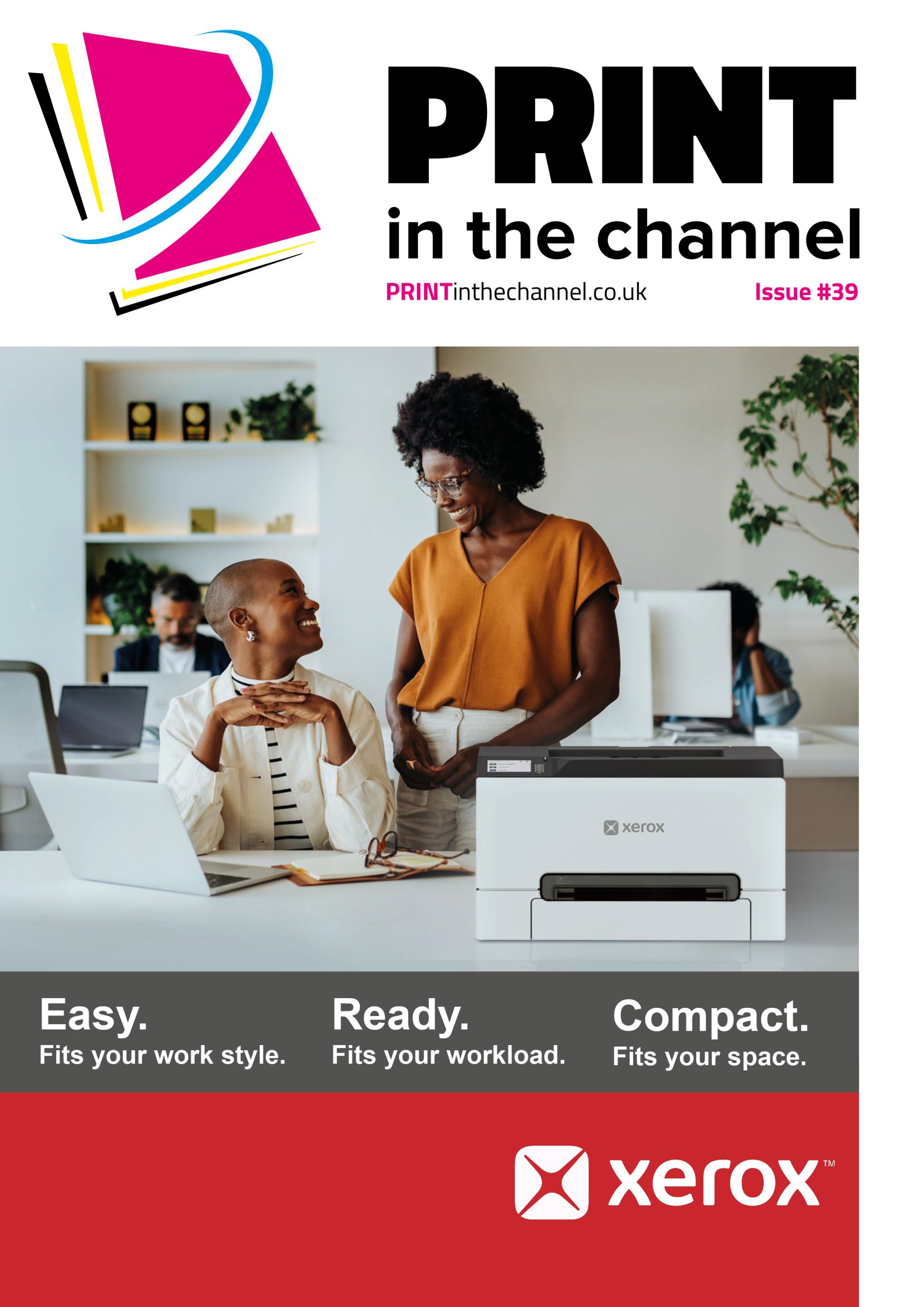
“One of the products unveiled on stage caught people off guard because its footprint was so small. But when you look at that set of features that were packed into the device, it was something that you would typically see in an A3 floor-standing model. The integration with the backend systems and print management – such as in corporate environment where the same badge that gets you through the door gets you into the printer – all those types of things are packed into a very small footprint because what we see in the print environment is a lot of businesses still relying on print but being challenged for space. They want to consolidate as much technology as they can, and not just into single devices, but also into the footprint that they’ve got as well.”
Pockets of growth
Matt adds that he is seeking pockets of growth in the market for A3 and production printers. “It’s no secret that the A3 print market is declining slowly at the macro level,” he says. “However, we have opportunities to grow inside that. Print remains a critical piece to a lot of types of businesses, and they are still buying printers, but there are certain drivers of purchases. For instance, clients want better security built into the product as well as ease of use – gone are the days where you train someone in the office to become the expert on the printer. People need to use it straight out of the box. It’s about simple deployment and ongoing management of it and taking the stress off IT teams that manage those technologies and endpoints.
“When we look at production specifically, there’s a lot of opportunity for growth there. Traditionally Xerox has done a good job of serving the heartland of that production market. These launches bolster that position. During some of the plenary sessions at the Forum we talked about the production roadmap and parts of production that are growing such as inkjet and continuous feed label printing. We are positioning ourselves now to go after that.”
Event value
Events such as the Channel Forum are important for Xerox and its partners, Matt says. “For us, they’re invaluable for a number of reasons, not just the interactions that this provides our partners to have with our executives, and our executives to communicate that strategy to our partners,” he adds. “Since we’ve announced the acquisition of Lexmark, what we’ve heard loud and clear from the channel is we need a constant stream of communication. This event was focused on that, pulling everybody together to hear our message in the same room was critical for us.
“Additionally, having two sets of partners that come from different worlds come together to see and hear the same message and how the company is converging, was important too. Outside of that, it’s great to see people that you haven’t seen in a while, network a little bit and have conversations over dinner or a coffee. This is invaluable as you never know what comes out of those conversations, there’s always great little nuggets of information that come out.
“Then there is the value of seeing 100 partners in a week and certain themes become clear about what we are giving them and what they want – our partners aren’t shy to tell us what they want, and that’s a good thing. We encourage that open, honest conversation and transparency so we can recognise where there’s opportunities, as well as make sure that we understand that the partners understand what their opportunity is.”
AI influence
Of course, AI crops up in many conversations now. “It is something everybody talks about, even though some may or may not know how it might apply to their business. We don’t do AI for the sake of AI: we want to deliver tangible value to the customer. What you see now is a lot of AI used behind the scenes to improve the reliability and servicing of those devices.
“We also focus on the data and information moving through the device itself. What can we do with AI there, how can we make that more valuable to the business? The AI conversation is definitely here, just like it is everywhere else. We are also looking at how we can use AI to introduce some intelligence into the product and automation so that the operator doesn’t need to know how to do certain functions.”
Future
Looking to the future, Matt is bullish about the prospects for Xerox. “We’re going to accelerate the pace and focus on executing that go-to-market model,” he says. “That means strengthening those partner engagements across print, services and software solutions, the whole ecosystem that we’re creating around the workplace and around production. We are laser focused on that right now.
“For the wider market, we expect to see continued demand for more secure, more efficient print devices with simplified deployment and management. Again, that’s a theme that’s been strong for some time now and it’s about positioning Xerox as a provider of that.
“The future is going to be shaped by broader product portfolios and more reliance on the partner ecosystem, with the partner front and centre for their clients. Automation and AI will also heavily influence what we will bring to market to help partners. There are a lot of opportunities in the marketplace for Xerox and our partners now and in the future.”